

Every town has a beginning. Ours involves a winding river, a determined family, and a home where everyone was welcome.
There’s something special about knowing the stories behind the place we call home. The roads we travel, the river winding through the valley, the familiar places we pass without giving them a second thought. Each holds stories waiting to be shared.
This Content Is Only For Subscribers
For Woodinville, one of those stories begins in September 1871, with a young family, a boatload of belongings, and a journey into the unknown.
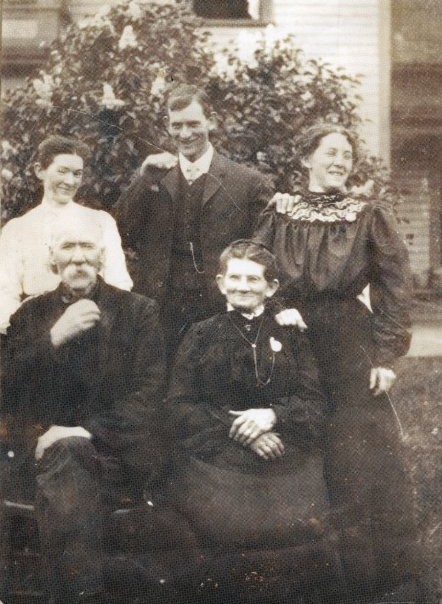
Ira and Susan Woodin gathered their two young daughters, Helen and Mary, and left their home in Seattle’s Rainier Valley in search of a new beginning. Ira had already made his mark in Seattle, operating the city’s first tannery with his father, but the Woodins were ready for another adventure. Their destination was a 160-acre homestead along Squak Slough, the winding waterway we now call the Sammamish River.
Years later, Susan would fondly recall that they had decided to do a little more pioneering. And pioneering they would do! Getting their family and all their possessions to their new home would prove to be an adventure all its own.
After traveling by wagon from Seattle to the shores of Lake Washington, the family loaded their belongings onto a flat-bottomed boat known as a scow and set out across the lake. With no steamboats to carry them, they had to pole the heavily loaded scow or tow it with a rowboat. At the northern end of Lake Washington, near present-day Kenmore, they entered the mouth of Squak Slough and began their winding journey upstream through the Sammamish River Valley toward what would become Woodinville.
The slough twisted and turned through the forested valley, making even a short distance feel like a much longer journey. Around every bend lay another stretch of water, another stand of trees, and perhaps the occasional question of whether they were getting any closer to their new home.
There were no paved roads to follow, no moving trucks waiting to unload, and certainly no sign welcoming them to Woodinville.
The Woodins settled on their 160-acre homestead, just north of where The Cut Shop stands today. Recognized as Woodinville’s founding settler family, they arrived in a valley that had been home to Indigenous Sammamish and other Coast Salish peoples for generations. Surviving the hardships of pioneer life demanded grit and resourcefulness, but it also required something just as important: good neighbors.
And the Woodins knew how to be good neighbors. As more families made their homes in the valley, the Woodin house became a gathering place and, in many ways, the heart of the growing settlement. Their home became the first school, the first church and a welcoming place for travelers needing a warm meal.
By 1881, when Susan Woodin became the settlement’s first postmaster, the family home had taken on yet another role. Imagine the bustle of people coming to collect letters, share news from Seattle, or simply catch up with a neighbor. With the establishment of the post office came a name for the little community: Woodinville.
But Susan’s days were hardly spent waiting for the mail to arrive.
Along with raising her family and welcoming visitors, she raised chickens and made butter to sell in Seattle. Twice a month, she set out with her goods on a journey that would make most modern commutes seem easy.
First she rode on horseback to Juanita. From there, Susan rowed across Lake Washington to Madison Park, where she still had several miles to travel before reaching Seattle’s markets.
When money was too tight for the Seattle stagecoach fare, Susan sent her butter ahead on the stage and walked the remaining three miles herself.
Imagine her striding along the road on a cold rainy morning, determined to reach the market, while her freshly churned butter traveled by coach.
That kind of perseverance helped build a life in early Woodinville. And that determination, grit, and spirit still resides here in Woodinville and its people today.
As the years passed, the settlement grew. Farms spread across the valley, mills and businesses opened, and the railroad brought new connections to the world beyond the river. What had begun as a handful of homesteads was becoming a community with a character all its own.
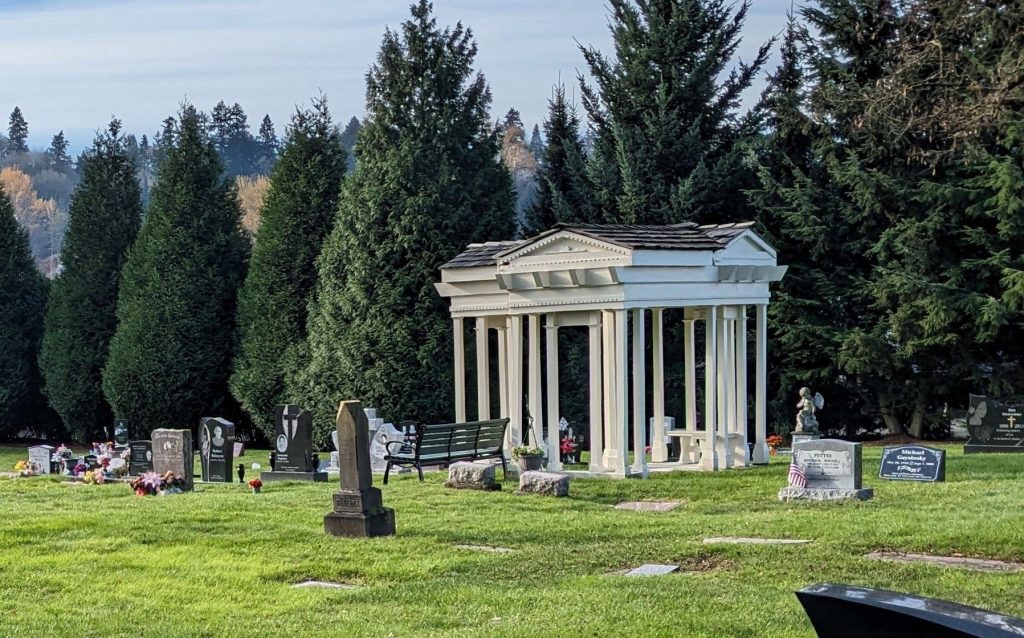
Ira and Susan continued to leave their mark. In 1898, they deeded an acre of their land for a community cemetery, ensuring that future generations would have a place to remember those who had helped shape the town. That cemetery still rests along NE 175th Street, across from today’s Flatstick Pub, a quiet reminder of the families whose lives are woven into Woodinville’s history. The Woodins are buried along with other settlers, resting in the very town that bears their name.
More than 150 years have passed since the Woodins made their adventurous journey up Squak Slough. The forests have given way to neighborhoods, the narrow trails to busy roads, and the little riverside settlement to a city known for its wineries, restaurants, and welcoming community.
The Woodins would have a difficult time recognizing the landscape today. They would certainly marvel at the cars rushing along our streets, and Susan might appreciate just how much easier it has become to get butter to market.
But perhaps, beneath all the changes, they would recognize something familiar.
Neighbors still gather. Families still put down roots. People come together to celebrate, lend a hand, and create the memories that make a place feel like home.
And perhaps that is the nicest part of Woodinville’s story. A city that began with a family willing to make room for others has never quite lost that spirit.
So the next time you follow the Sammamish River, pass the old cemetery on 175th, or find yourself sitting in Woodinville traffic, remember Ira and Susan Woodin.
Our city’s name is their legacy. But the community they helped nurture is the more enduring gift.
Contributed by the Woodinville Heritage Society & Museum, a nonprofit dedicated to preserving and sharing our community’s history. Discover more at woodinvilleheritage.org. Visit the museum on the first Sunday of each month, from 1–4 PM. Located at 14121 NE 171st Street.