


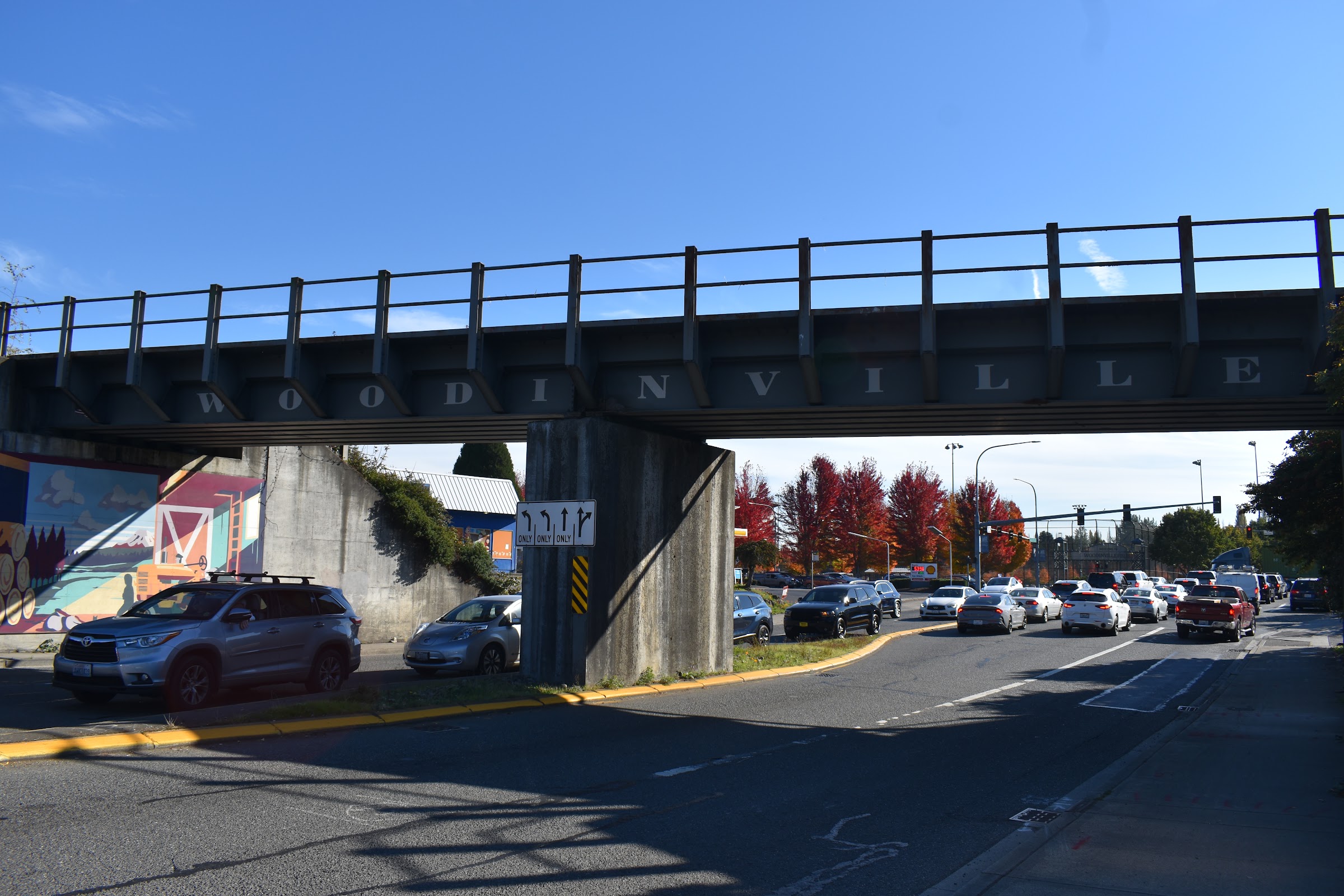
Construction plans to widen State Route 202 and replace the trestle above the road with a pedestrian trail are expected to start in January 2027 and take at least a year to complete, according to Woodinville city officials.
This Content Is Only For Subscribers
Federal and state grants will cover $14.7 million of the project’s approximately $28 million cost, with the remaining $13.7 million coming from taxes, development fees and city dollars through Woodinville’s 2025-2030 Capital Improvement Plan. The city’s public works director Asha D’Souza said construction will begin early next year.
“There will be impacts,” said D’Souza. “And not just the adjacent property owners, but almost the entire city that is coming to downtown and passing through.”
The city has been coordinating with nearby property owners to help them work around the construction. They have agreements with Pep Boys auto repairs, Jackson’s convenience store and Aloha Car Wash, businesses located on or close to State Route 202. No businesses or property owners will have to close or be displaced by the project, D’Souza added.
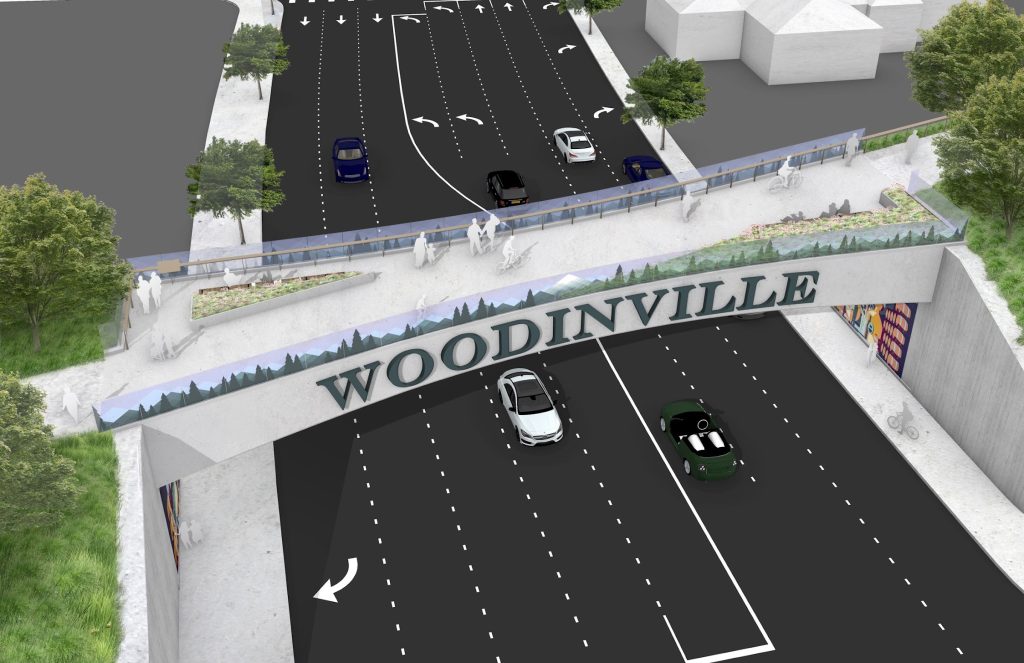
As part of the project, crews will take out the trestle and replace it with a new bridge and trail for walking and biking. Replacing the trestle will allow them to remove the central column supporting the structure, making room to widen State Route 202 below. This plan will add three new lanes between Northeast 175th Street and Northeast 177th Place.
The trail above the road will connect the Sammamish River Trail to Northeast Mill Place, running parallel to Little Bear Creek Parkway. Eventually, this trail will also become part of the Eastrail Corridor, a planned 42-mile trail built on a former railroad line running from Snohomish to Renton.
The construction for this project is expected to cost $23.5 million in addition to the almost $5 million already spent buying land and creating a design. D’Souza said she would not consider this price high for the project, but that the project will have construction constraints that lead to higher costs.
“This bridge is being built on top of a state route while there’s an active commute happening in a very highly congested peak traffic area,” said D’Souza. “We’ll have to be very creative, very smart on how to do the construction with minimal impacts. . . that all adds up to cost.”
The construction plans have already undergone state and federal environmental review through the State Environmental Policy Act and National Environmental Policy Act, which say the surrounding environment will not be significantly affected. D’Souza added that this construction will be less impactful on the environment because they are working in an area that is already developed.
The City of Woodinville has been working on this project since they received the rights to the railroad above State Route 202 in 2015. Before the city had those rights, D’Souza said, the trestle was supposed to be replaced by another similar trestle bridge.
Now, city officials expect the project to improve traffic in this downtown area by making more room on the road and lessening the bottleneck effect that has forced many vehicles into only a few lanes.
Despite the expected improvement, however, D’Souza said this project will not address all the traffic concerns in this area. The city is aiming to eventually improve the next section of the road from Northeast 177th Place to State Route 522, an area that is controlled by the Washington State Department of Transportation.
Replacing the trestle with a new bridge and widening State Route 202 is expected to take until summer or fall of 2028, D’Souza said. City officials are hopeful that their investment in this section of the road will prompt WSDOT to work with Woodinville to continue street improvements in the area.