


Evie Gold, the parent of a 7-year-old Wellington Elementary School student, sees her son Aaron’s learning regressing instead of progressing.
This Content Is Only For Subscribers
In his second grade class, he’s been shown a screen to illustrate stretches in physical education, clapped along to prerecorded videos in music class and watched cartoons during lunchtime.
Rather than enhancing his learning, Gold believes the increased use of screens and devices in the classroom is changing Aaron’s behavior, making him more defiant and less able to develop appropriately for his age.
“I feel like he’s just less regulated, which is why he’s making poorer decisions,” said Gold. “The brain is so overstimulated that it can’t catch up.”
Now, Gold is fighting to change the amount of screen time her son and his classmates get in class. After hearing similar stories from parents at playgrounds, birthday parties and her daycare’s pickup line, Molly Adams joined Gold in her advocacy, hoping to inspire a change before her younger children start school.
Adams and Gold founded the Northshore Digital Wellness Alliance in June 2026, gathering parents to advocate for a consistent and transparent educational technology policy across the Northshore School District, which also includes schools in Kenmore and Bothell.
“We’re trying to be that kind of megaphone for parents across the district that are feeling some pretty negative ways about the state of technology use,” said Adams. “We’re trying to have a collaborative approach with the school district to try and find compromises.”
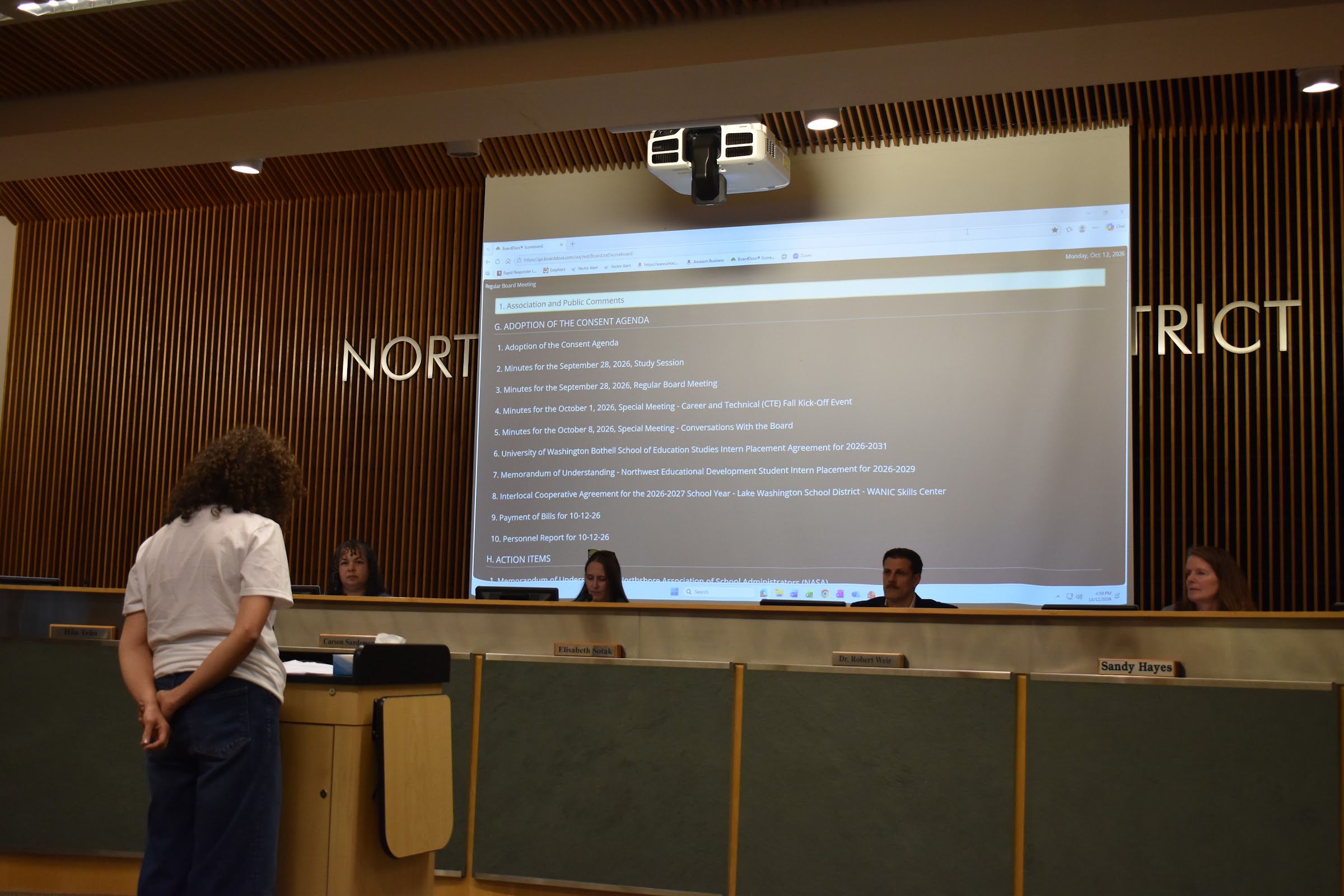
Although Gold and Adams started their efforts by talking to principals directly, they soon realized they needed to bring the conversation to the district to make a meaningful change. On Oct. 12, they rallied seven members of the alliance to speak in favor of stronger technology use guidelines during a Northshore School Board meeting.

“We are asking Northshore to look at technology as a whole system and create a clear district-wide vision for when [technology] supports learning, when it doesn’t and how much is appropriate across a student’s school day,” said Gold, addressing the school board during public comment.
Digital tools, devices and platforms used for teaching and learning in educational settings are called educational technology, or EdTech. In a September 2026 report released by the American Psychological Association, the APA warned that although students might enjoy using EdTech, these tools may not always result in improved learning outcomes.
“EdTech tools can receive high ratings for engagement or enjoyment but evidence shows little benefit for learning when knowledge and skills are measured directly,” reports the APA. “That is why learning outcomes, not engagement alone, are the most important test of an EdTech tool’s value.”
The debate over device use in schools is not isolated to the Northshore School District, though the goals of conversations around technology differ. On Oct. 2, Washington Gov. Bob Ferguson proposed a Phone-Free Schools Act which would require students to store cell phones away during the school day. Although Ferguson’s proposal also targets technology in schools, it aims to limit the use of phones for students’ personal use, rather than looking at the technology teachers are using for learning.
Northshore’s policy already prohibits the use of personal devices during the entire school day for elementary and middle school students, and limits their use for high school students to breaks between classes.
At the Oct. 12 school board meeting, the alliance focused on K-12 students’ use of EdTech, expressing concerns about educators’ use of devices, videos and streaming, apps, digital curriculum, assessments and artificial intelligence.
“We agree that every student should have access to the tools they genuinely need to learn, but providing every student with the same device is not the same as providing every student with what they need,” said Amanda Records, an alliance member and parent of two Northshore students. “A student who benefits from assisted technology, a student who is easily distracted by a device and a young child who may learn better through hands-on or offline instruction do not all have the same needs.”
Shelby Reynolds, the assistant director of instructional technology and library services at the Northshore School District, said she has started hearing more concern from parents about screen time over the last 18 months. Many of these concerns, Reynolds said, are coming from parents with children in elementary school.
Currently, the Northshore School District gives iPads to students in kindergarten and first grade during the school day. Students in second grade through 12th grade receive a laptop computer to use at home and in school.
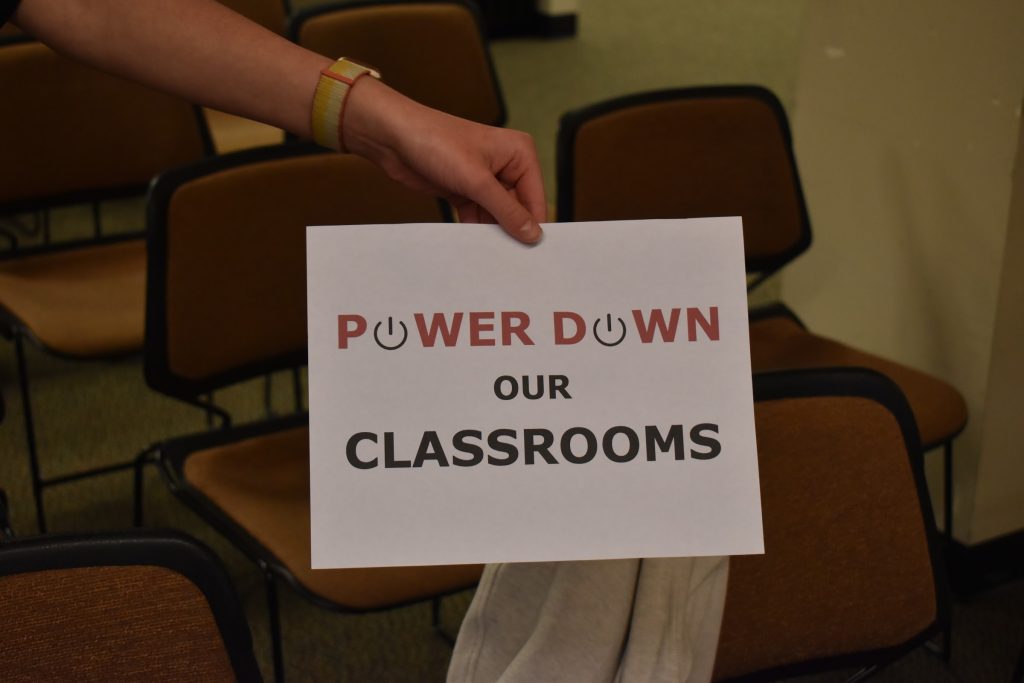
Reynolds said Northshore uses these tools to personalize students’ learning experiences, allowing teachers to provide different levels of instruction based on students’ needs.
“One student might need a technology tool for communication or for translation or for differentiation on a particular topic, and another student might not,” said Reynolds. “If I just put a blanket 30-minute screen time limit, I might actually be harming a student who needs that additional time, [and] I might inadvertently be giving too much screen time to a student who actually doesn’t need it.”
Based on the goal of providing equitable instruction for students, the district will not be implementing a time limit on screens in classrooms, Reynold said. This leaves individual teachers to make the decision on how much screen time and technology use will happen in their classroom.
“There’s no mandate because every kid is different, and every teacher needs to have the professional autonomy to make decisions about how best to deliver instruction,” Reynold continued.
Instead, the district is focusing on giving their teachers the resources they need to use these educational technology tools in a way that increases student learning outcomes. In October, they launched a program called Meaning over Minutes, which says that teachers will only use technology when it clearly improves students’ learning.
Reynold also said the district is currently working on making a culture shift away from using technology as a reward or as entertainment. This includes working with principals to stop the use of educational video content during lunchtime by providing teachers with lists of other activities to do with students.
The conversation about devices in schools has also pushed the district to create a parent advisory group where parents and educators can communicate. Rather than making school board meetings the only avenue for parents to share their concerns, the district aims for this advisory group to be a place for open dialogue around technology.
“We have heard from parents that this is a concern, and we want to make sure that there’s a more formalized way for parents to get involved,” Reynolds said. “We’ll say, how can we, as a partnership, have conversations together about how to make sure that parents and educators are working together to do best by our kids.”